Material decision guide
Natural limestone vs. precast: compare the whole assembly.
The useful question is not which material wins in every situation. It is which process best fits the design, repetition, surface, installation, schedule and budget of this project.
C / 01
Start with the element, not the marketing claim.
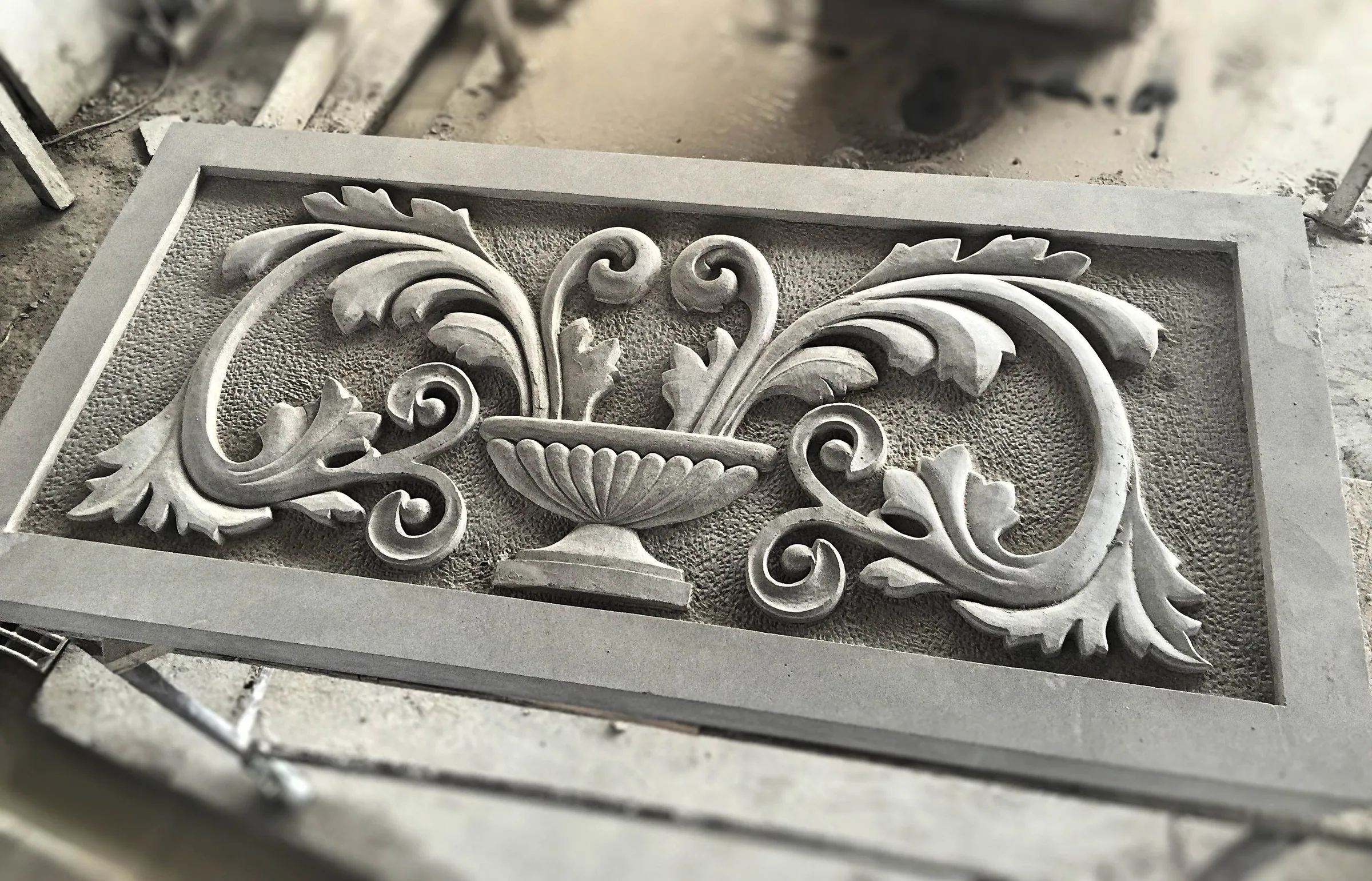
A carved address panel, a field of repeated veneer units and a fireplace surround ask different things of a material. Compare the specific unit, joint, finish, exposure and installation path before making a broad material choice.
Six decision factors
Use the same questions for both options.
This is a design framework, not a structural specification. A qualified architect, engineer, installer and product supplier should review the final assembly.
| Decision | Natural limestone | Precast stone |
|---|---|---|
| Appearance | Natural geological variation is part of the material. Samples and an approved visual range help set expectations. | Colour and texture are created through a controlled mix and mold process. Repetition may be more uniform, depending on production. |
| Custom detail | Profiles and one-off carving can be cut directly into the selected stone, subject to the geometry and material. | Detail is formed in a mold. It can be effective when the mold, repetition and release geometry suit the design. |
| Repetition | Repeated profiles can be produced while the natural colour and markings continue to vary piece by piece. | A mold can support repeated units efficiently, with variation tied to the mix, casting and finishing process. |
| Assembly + weight | Unit size, thickness, anchoring, joints and handling need to be designed as part of the wall or interior assembly. | Weight and attachment still require coordination. Requirements depend on the specific product and assembly, not the label alone. |
| Maintenance + repair | Performance depends on stone selection, detailing, exposure, installation and care. Avoid universal low-maintenance claims. | Performance depends on the mix, reinforcement, finish, exposure, joints and repair method. Review the exact system. |
| Schedule + budget | Material availability, shop drawings, cutting, carving, approvals, packing and installation all shape cost and lead time. | Mold development, repetition, production sequence, finish, transport and installation shape cost and lead time. |
One-off geometry
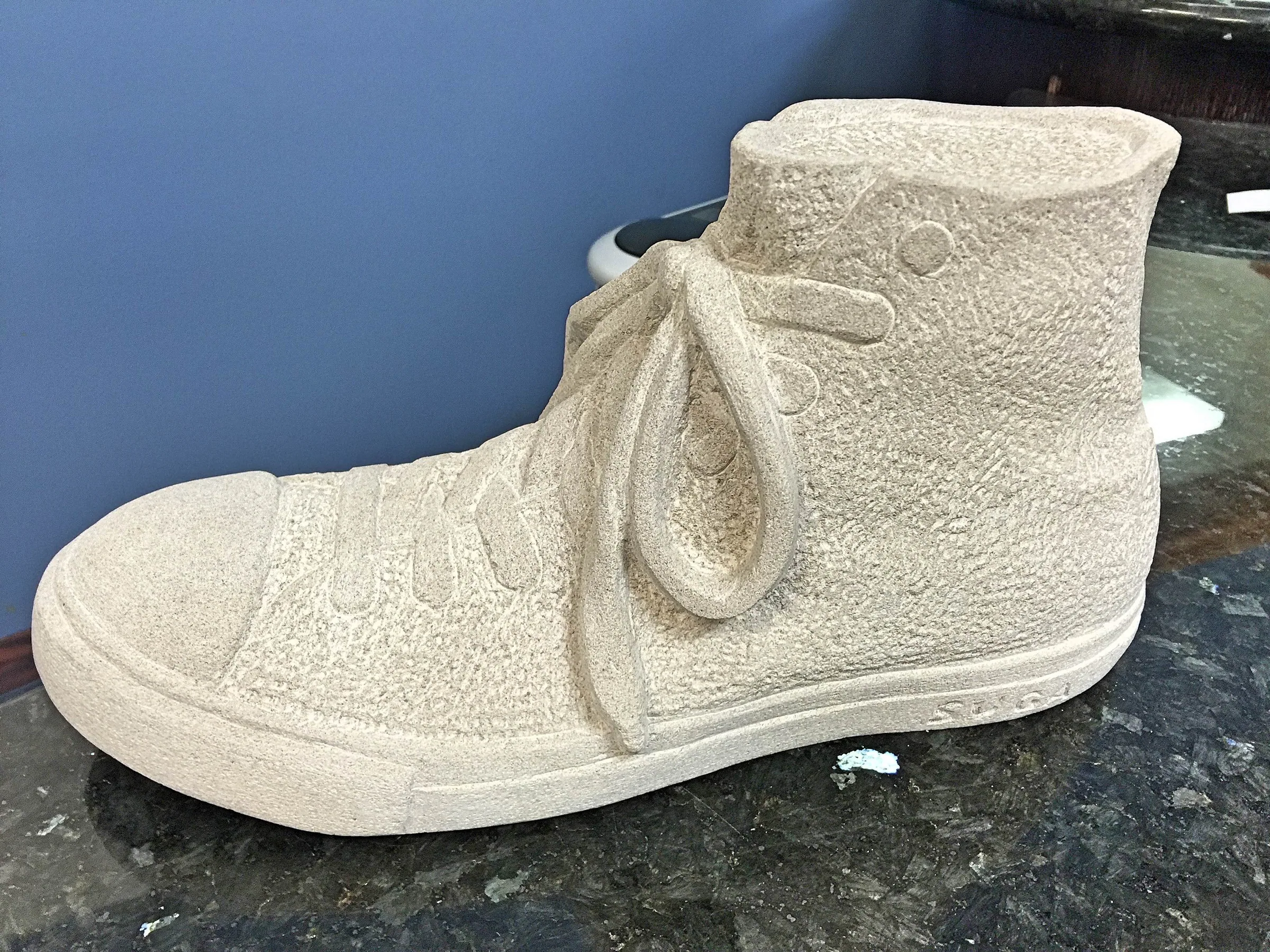
Custom carving makes the design question visible.
A sculptural reference is an extreme example, but it exposes the same issue as a cornice, keystone or mantel: the selected process has to hold the intended profile and surface at the required scale.
Discuss a limestone elementNeed visual context first?